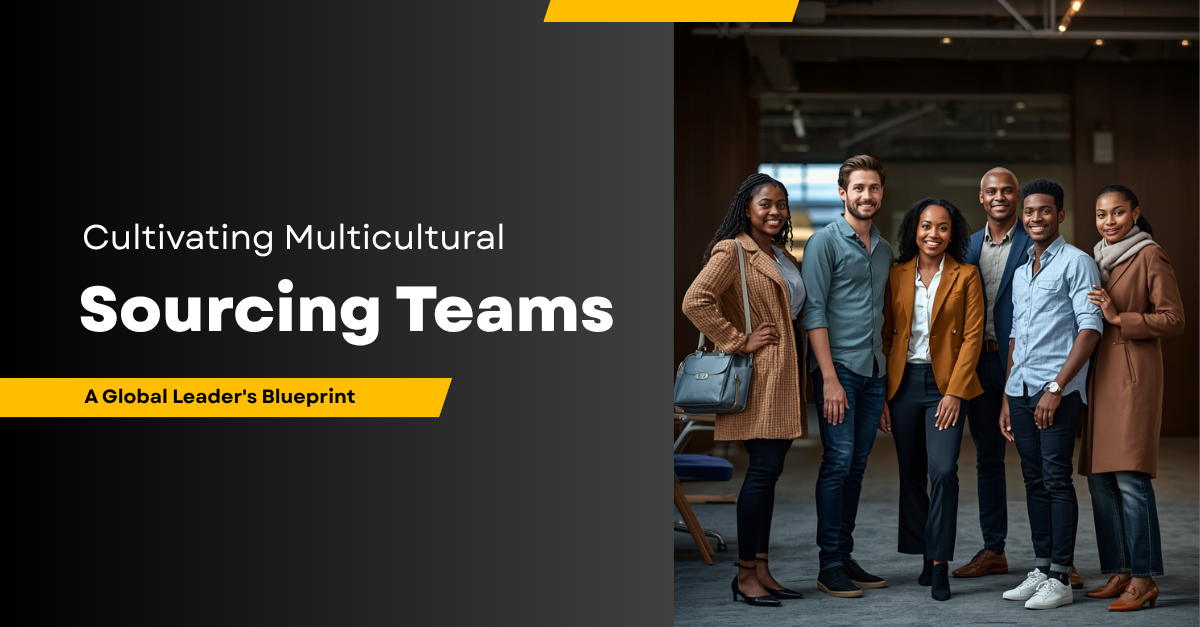
Cultivating Multicultural Sourcing Teams: A Global Leader's Blueprint is not a theoretical exercise. It is one of the most practical and consequential leadership challenges facing procurement executives who operate across geographies. The quality of a multicultural team — its cohesion, its creative range, its ability to navigate ambiguity — is often the decisive factor in whether a global sourcing strategy succeeds or stalls.
Having led sourcing teams across India, APAC, the Middle East, ANZ and North America, I have learned that the blueprint for multicultural team excellence is built on a small number of principles, applied consistently and with genuine commitment.
Building Psychological Safety Across Cultures
One of the most important foundations is psychological safety — the belief that team members can speak up, disagree and contribute without fear of embarrassment or retribution. This is always important, but it requires deliberate cultivation in multicultural settings where power distance norms vary significantly. In high power distance cultures, team members may be reluctant to challenge a senior leader even when they have important information. Creating explicit permission for candour is a leadership responsibility.
Communication Norms and Style Differences
Another key element is navigating communication style differences. High-context cultures — common across much of Asia — communicate meaning through relationship, tone and implication. Low-context cultures — more common in Australia, the US and Northern Europe — prefer direct, explicit communication. Neither is superior, but the gap between them is a frequent source of misunderstanding in global teams. Leaders who can code-switch between communication styles, and who create norms that work for both, build teams that collaborate more effectively.
Structured Inclusion in Decision-Making
Culture and context shape how team members engage in decision-making processes. Leaders who assume that silence means agreement, or that the loudest voices represent the team's best thinking, consistently underutilise their multicultural talent. Structured approaches — rotating facilitation, written input before discussion, explicit invitation for dissenting views — help ensure that the full range of perspectives is heard.
Development and Career Conversations Across Cultures
Performance conversations and career development discussions are shaped by cultural norms around feedback, ambition and humility. Leaders who apply a single cultural template to these conversations will misread the signals they receive and give feedback that lands differently than intended. Cultural intelligence in talent development is not optional — it is essential.
Looking ahead, the ability to cultivate high-performing multicultural sourcing teams will become one of the defining leadership competencies in global procurement.
The leaders who invest in understanding and bridging cultural differences build teams that are not just more inclusive — they build teams that are more capable, more resilient and more creative.